‘You have to fight for your voice and opinion to be heard’
Jos Lee, Melodic Records
– – – –
Despite the growth in female artists, and the celebration that has come with that, unfortunately women in the industry continue to face deep-rooted limitations in opportunity and a lack of support. Women remain under-represented and overlooked, especially in behind-the-scenes roles.
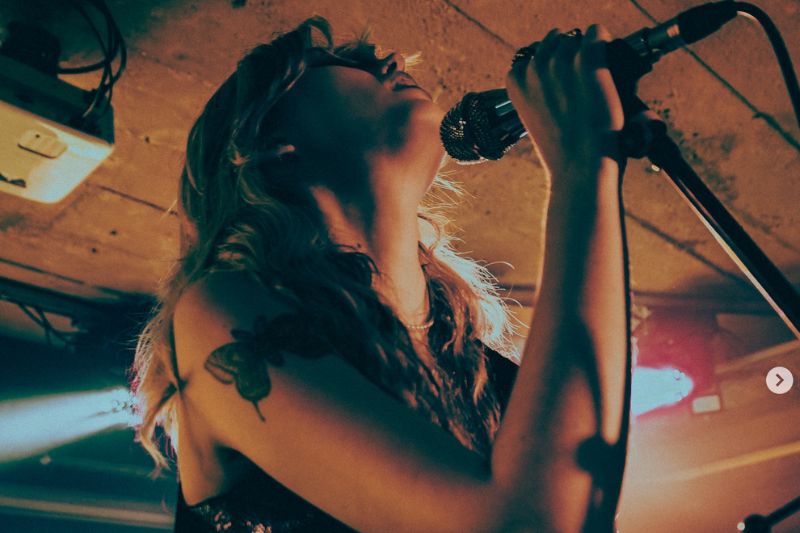
At The Grayston Unity, among many other grassroots venues situated in Calderdale, there has been an array of amazing female fronted bands and artists. Loose Articles and The Red Stains played Town Festival – a sold-out show that went down a treat for all members of the audience. In the months to come, Eva Kiss, Ellie Telford and Marie Franc are just some of the incredible female names that will take centre stage.
“In a male-dominated industry, being the front woman of a rock band is invigorating,” says Eva Kiss, an up-and-coming grunge artist from West Yorkshire. “After years of being belittled and not taken seriously, I have come through so proud to represent women and my queer community on stage.”

The words ‘belittled’ and ‘not taken seriously’ are unfortunately a common theme for women in all fields, not just the music industry. Issues lie in unequal opportunities, objectification and the glass ceiling. How can we gain any empowerment from this situation?
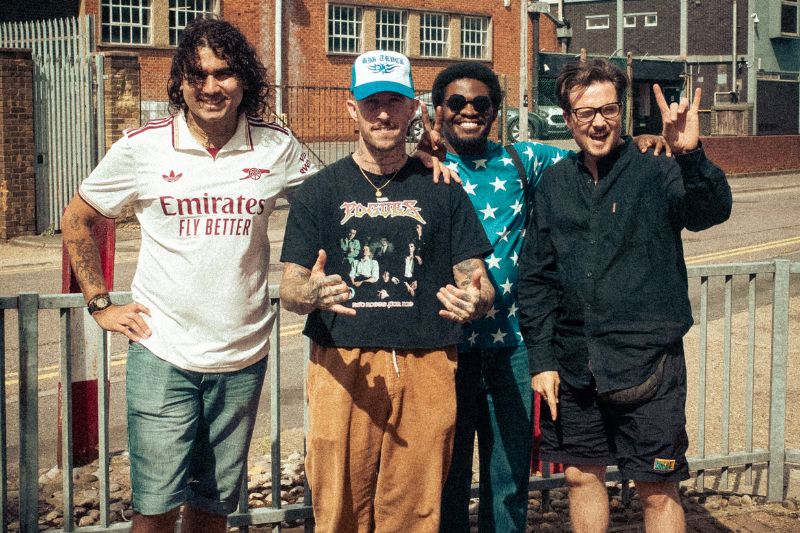
Loose Articles are a great example of throwing misogyny back in the face of the source, and finding empowerment in the fact that actually, yes, women can do what men do in the industry. Their outstanding lyric from Kick Like a Girl is the perfect statement, showing we can do what men do – in sport, music, the arts, you name it.
Women can play sport
We can kick a ball with some force
When we play
We get good results

For the grassroots community, International Women’s Day has become prominent and celebrated. The Northern Quarter in Huddersfield have put together a ‘SisterHudd’ night, with Nadia Amini, Sydney Lyra, Flowers, El Manning and Tray Tronic. A whole Saturday night dedicated to girls supporting girls and great music. Belgrave Music Hall welcome Tiffany Calver, 2QUID, Jamurai, Karishma and Mami Chula for a night of female-boosted beats. The aim, of course, is to have more gigs like this, giving women a platform, not just on International Women’s Day. Things are looking up, but there is still more work to be done.
This is not just an issue that has run through local and grassroots scenes, of course. As of summer 2024, 63% of acts booked at major UK festivals were all-male. The Music Insight Report also found, around this time, that over half of women in music have experienced gender discrimination. This stems from an array of beliefs and issues – caring responsibilities, music genres which have been defined by gender, financial and pay gap crises, and often, an uncomfortable, patronising, or unfair environment.
When Glastonbury’s 2024 line-up had two female acts headlining the Pyramid Stage – for the first time in its 50+ year history – it brought hope that things might change. The music business flows from big establishments to grassroots, basement venues. Small venues support small artists and accommodate the local scene and low-budget shows. These artists progress and (hopefully) give back once they reach bigger audiences.
Without the grassroots community, the bigger picture operations truly would suffer. So, it can only make sense that each and every sector, no matter how big or small, is setting an example for the other, supporting women, on stage and behind the scenes. This includes equal pay and equal opportunity, without resentment or judgement, but rather with encouragement. Because if men faced this kind of discrimination, we would be the first to hear about it.
With that in mind, let’s focus on the success that we’ve seen come from women in the industry over the past few decades. With the need for change, celebrating how far we’ve come is also just as important.

In 2015, Kim Gordon of Sonic Youth spoke out to The Guardian about how she struggled as a woman in an otherwise male rock band, describing how she refused to play the game of adhering to the media’s expectations of how a woman should dress, act and look.
She also went into detail about how it felt to be a mother at the time, how she couldn’t help but think of the pioneer women in her family, and recognise them. Her book, Girl in a Band goes through this as well. An influential “badass feminist rock goddess”, she is an amazing asset to women looking for inspiration and uplift.
The Grayston Unity’s Jess Ainsworth talked to us about the instinctual reluctancy that women feel to take credit. She is responsible for the main chunk of The Grayston’s interior design and, although she tends to stay out of the limelight, is responsible for a lot of the behind-the-scenes decision making and logistics.
“I’m part of three businesses, run a household and sometimes it feels like we’re too busy to take credit. But when The Grayston opened this time, I did get on stage and said you need to know who I am and what I’m doing, because I thought it’s important for other women to see the role that we play. It’s important to stand up for what we’ve done and celebrate it.”
On the night The Grayston No. 2 opened on Horton Street, the atmosphere was celebratory and proud, and seeing a great woman get up on stage and take credit for the work that she’s done was nothing but inspiring.

“I’ve had to remind the men in the industry that I’ve worked with that I’m a business partner. I’m not just a wife, I am a business partner. It’s about showing what we’re doing to help other women realise that there’s a role and place for them. Although it shouldn’t be the case, we mustn’t let ourselves and other women be walked over or dismissed in any workplace. Women, remind and assert yourself where you can. Men, and others, listen and welcome.”
“Seeing an image of Joan Jett, Debbie Harry and Lita Ford in The Pub Paper with the caption ‘All women who didn’t need to twerk for attention’ felt wildly irrelevant. Why are we still framing female artists in opposition to something, rather than celebrating them for what they create? 2024 was a year of women thriving in music, with The Last Dinner Party, Chappell Roan and so many others proving that artistry speaks for itself. It’s a moment of long-overdue recognition, but as a musician and a woman, it still gets to me when ‘female’ is slotted before ‘songwriter’, as if it should change how my music is received.
“There’s real momentum and a positive vibe for the future of music,” says Ellie Telford. “There’s a conscious effort to support women in music and it’s exciting to be part of a future where talent, not gender, defines the conversation.”
She’s right. The media, ever since billboards and newspapers, has always managed to pick women apart – in the music industry, theatre, modelling, you name it. Recent comments directed to Millie Bobby Brown about how “she’s aging horribly” only prove that. And frankly, it’s no one’s business how a woman chooses to present herself, publicly or not. The internet has allowed anyone to put their opinion out there and it only highlights the deep-rooted misogyny at the mere thought that a woman can be successful. There are hundreds of thousands of examples. All you’d have to do to see this is open Twitter.
Jos Lee works at Melodic Records. They are a record label assistant, working over areas such as mail order, social media and sync.
“I also manage two bands and occasionally run events. When I started at Melodic I was the only person in the office who wasn’t a man and that was incredibly intimidating. I was very lucky that Melodic Records is made up of guys who have tricky discussions and make space for me and my opinions and my development. Entering a space and an industry that is so famously unaccommodating to non-men is really scary and hard. You have to fight for your voice and opinion to be heard a lot more. I feel a lot of the time I’m trying to convince others, and myself, that I belong in this industry, and that there is space for me. I always feel so proud seeing women and non-binary people being so unapologetic in music, and I wish more men boosted and supported them.
Marlo De Lara is a musician and academic and part of the Ladyz In Noyz international feminist network.

“International Women’s Day means a lot to me as a sound artist whose work explores my identities and the histories of the people I come from,” she says.
“Living in both the UK and USA, and having migrant parents, I think a lot about my ancestry. In my culture, women hold together families and keep the web of our families interconnected. Back in the Philippines, I have memories of aunties and grandmothers preparing meals while humming, overseeing village interactions and being protective and loving. My art in some ways is a celebration of the ways my ancestors and women today hold us together to make better tomorrows. Despite continued work to level the playing field, women and particularly women from marginalized backgrounds, still have challenges getting exposure and pay. Days like IWD remind me that the progress we have made has been by embracing our unique strengths and amplifying our communities. We are carving our own paths to success on our own terms in the face of it all”
This International Women’s Day, ask yourself: Are you listening to female artists? Going to female fronted gigs? Do you believe that women can do just as good a job at sound engineering, handling press, venue managing, playing guitar? Because they can.
Words by Niamh Robinson – @niamhsjournall

Leave a Reply